New CloudCube instrument pioneers miniaturized radar for studying severe weather
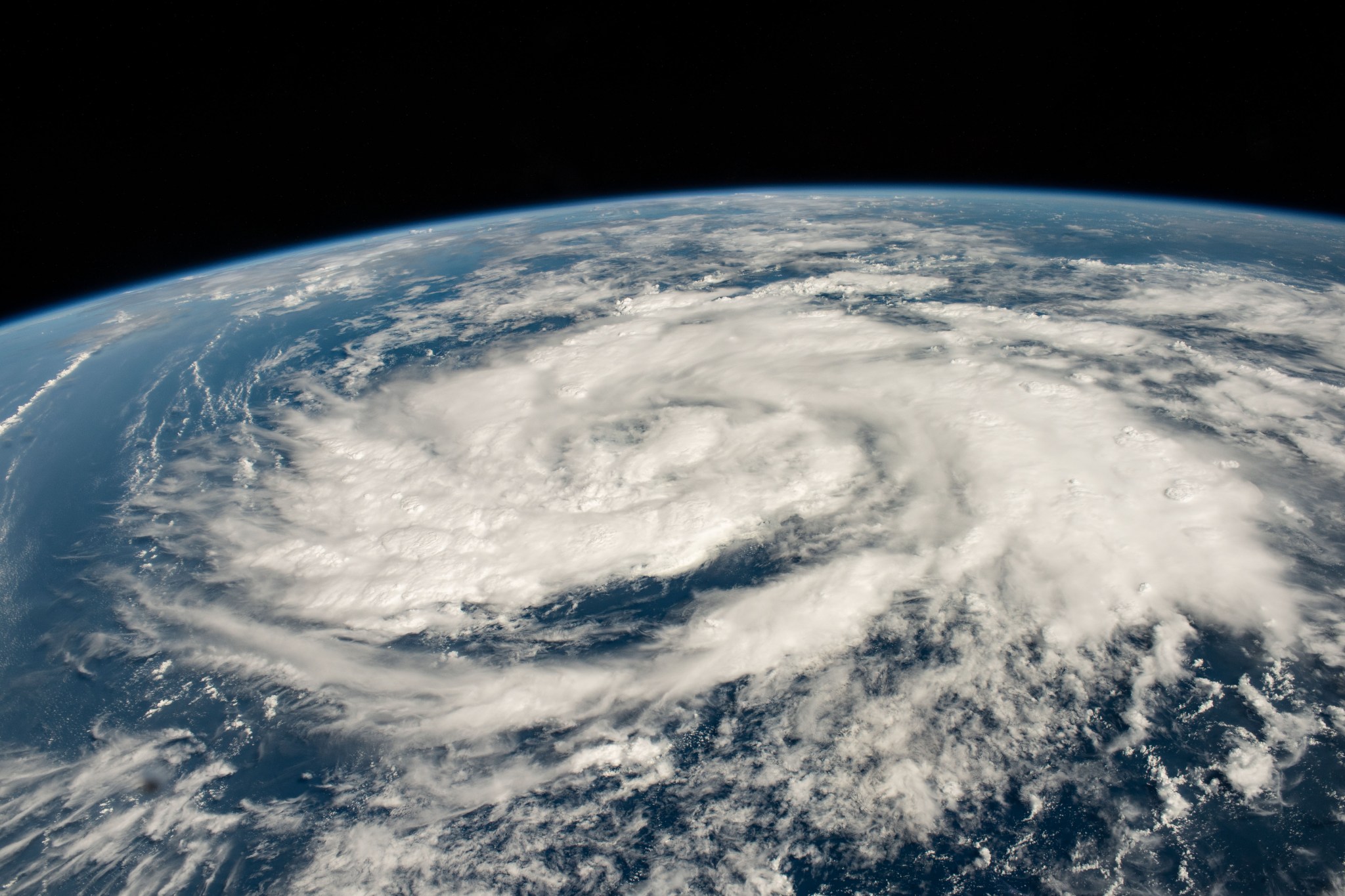
Image of a powerful storm churning over the Arabian Sea (Image Credit: NASA / ISS). CloudCube’s three-band radar will help researchers study storms like this using constellations of small, cost-efficient satellites.
03/10/26 – In 2018, NASA’s RainCube instrument paved the way for cost-efficient commercial weather missions. Now, NASA is building on that success to create CloudCube, a next-generation radar instrument that will significantly improve our ability to forecast precipitation and severe weather.
Developed with support from NASA’s Earth Science Technology Office (ESTO), CloudCube features a multi-frequency radar configuration that transmits Ka-band, W-band, and G-band signals from a single antenna. Designed to fit aboard an ESPA-class small satellite, CloudCube will be one of the first compact radar instruments capable of probing weather systems with multiple radar signals simultaneously.
These multi-scale measurements will make it easier for researchers to collect information about dynamic cloud systems, increasing the accuracy of weather forecasts and models.
“We’re making a low-power, low-mass instrument to facilitate new cost-efficient missions for
atmospheric observations. Doing a multi-frequency radar, especially with G-band, is pretty novel,” said Raquel Monje, a systems engineer at JPL and principal investigator for CloudCube.
Monje explained that there are relatively few instruments in space dedicated to observing weather with active radar instruments. Those that are in orbit tend to operate within a single frequency, like Ka-band for precipitation profiles or W-band for measuring cloud particles.
To date, no G-band radar has ever been flown in space. This high-frequency radar signal is ideal for measuring liquid water content in shallow clouds, a key variable in weather predictions and precipitation forecasts.
“Basically, we’re weighing clouds using these combinations of frequencies in a way that we couldn’t do before we had the G-band,” said Matt Lebsock, a researcher at NASA’s Jet Propulsion Laboratory (JPL) and co-investigator for CloudCube.
To fly all three radar instruments aboard the same compact satellite would be an unprecedented feat. RainCube ushered in a new era of commercial weather missions, and CloudCube could make those commercial missions even more useful to data users and emergency managers.
CloudCube leverages several technology innovations to produce multi-scale radar measurements from a compact platform. First, the instrument features a multifrequency feed horn that eliminates the need for separate antennas for each signal.
Second, CloudCube employs a novel, miniaturized radar architecture that requires less power and takes up less space than previous atmospheric radar instruments. This reduces the cost of dispatching high-frequency radars into space aboard small satellites, without reducing data quality.
Like RainCube before it, CloudCube opens the door to advanced remote sensing capabilities, setting the stage for next-generation commercial weather missions even better equipped to forecast weather events and severe storms than they are today.
“This technology could have phenomenal commercial applications,” said Pavlos Kollias, an atmospheric scientist at Stony Brook University and collaborator for CloudCube, adding that the miniaturized G-band alone could be valuable not just for weather prediction, but also medical devices and other consumer products.
“The CloudCube observations will provide novel, global measurements of cloud and precipitation microphysics. As such, they are expected to guide microphysical model development in high-resolution numerical weather prediction models and improve their predictive performance.” said Kollias.
Last year, CloudCube participated in the Eastern Pacific Cloud Aerosol Precipitation Experiment (EPCAPE), a ground campaign sponsored by the Department of Energy. A paper describing the results of their experiment can be found here.
Most recently, CloudCube collected its first airborne observations of snowfall as part of the North American Upstream Feature-Resolving and Tropopause Uncertainty Reconnaissance Experiment (NURTURE) campaign.
ESTO’s Instrument Incubation Program (IIP) funded CloudCube. For more information about working with NASA to develop new instruments for Earth observation, visit the IIP website.
Gage Taylor, NASA Earth Science Technology Office